


Net Zero Energy Buildings: Powering Europe's Sustainable Future
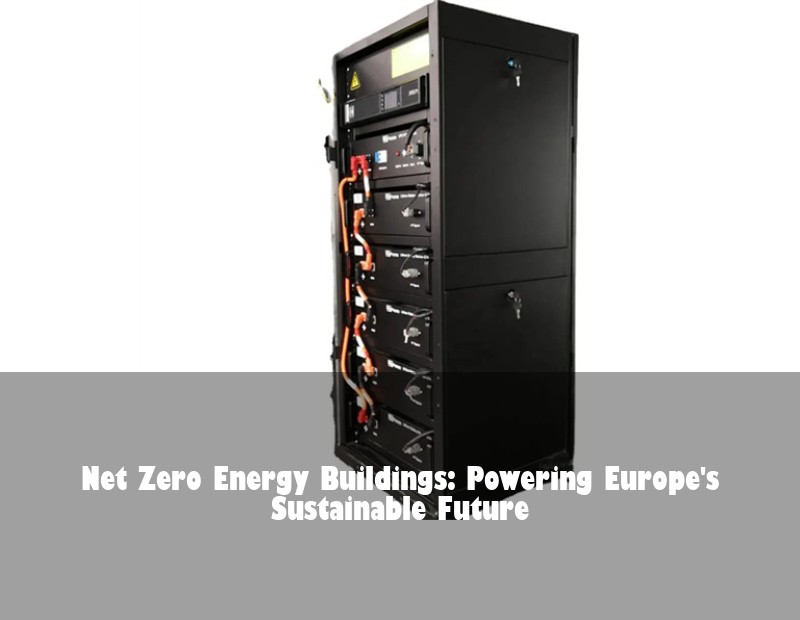
Imagine your building not just sheltering people, but actively generating its own clean power, storing excess energy, and achieving true energy independence. This isn't science fiction; it's the reality of Net Zero Energy Buildings (NZEBs), and they are rapidly transforming the European built environment. Driven by ambitious climate targets, rising energy costs, and technological leaps in solar photovoltaics (PV) and energy storage, NZEBs represent the pinnacle of sustainable design and operation. Let's explore how this powerful combination is making the net zero dream achievable across Europe.
Table of Contents
- The Imperative: Why Europe is Racing Towards Net Zero Buildings
- The Power Duo: Solar PV and Storage as the NZEB Engine
- Beyond Theory: Real-World Success in Action
- Navigating the Path to Net Zero: Key Considerations
- The Future is Bright: Scaling NZEBs Across Europe
The Imperative: Why Europe is Racing Towards Net Zero Buildings
The built environment is a significant energy consumer. In the EU, buildings account for approximately 40% of total energy consumption and 36% of greenhouse gas emissions. This immense footprint makes decarbonizing this sector absolutely critical for meeting binding climate goals like the European Green Deal and the Energy Performance of Buildings Directive (EPBD), which mandates that all new buildings must be nearly zero-energy (NZEB) by 2030, and existing stock must be renovated to high energy standards.
This regulatory push, coupled with volatile fossil fuel prices impacting operational costs, creates a powerful business case. Building owners and developers are realizing that NZEBs aren't just environmentally sound; they are economically resilient, offering long-term energy cost stability and increased property value. The question is no longer "if" but "how" to achieve net zero.
The Power Duo: Solar PV and Storage as the NZEB Engine
Reaching true net zero – where a building generates as much renewable energy as it consumes over a year – hinges on two core technologies working in concert: Solar Photovoltaics (PV) and Battery Energy Storage Systems (BESS).
The Solar Foundation: Capturing Abundant Energy
Rooftop and facade-integrated solar PV systems are the primary energy generators for NZEBs. Modern, high-efficiency panels convert sunlight directly into electricity, feeding the building's immediate needs. Advances in panel technology (like bifacial modules) and smart mounting systems maximize yield even on complex surfaces or in less-than-ideal sun conditions common in parts of Europe.
Storage: The Essential Enabler for True Independence
Here's where the magic truly happens. Solar generation peaks during daylight hours, often mismatched with peak building demand (especially mornings and evenings). Without storage, excess solar energy is exported to the grid, and the building must import energy when the sun isn't shining. While grid interaction is part of the model, true energy independence and resilience require on-site storage. Batteries capture surplus solar energy during peak production, storing it for use:
- During Peak Demand/High Tariff Periods: Discharging stored energy avoids expensive grid imports.
- At Night or During Low Solar Production: Powering essential loads without grid reliance.
- During Grid Outages: Providing critical backup power (enhanced resilience).
Modern lithium-ion batteries, with their high energy density, efficiency, and decreasing costs, are ideally suited for NZEB applications. Intelligent energy management systems (EMS) are the brains, constantly optimizing when to charge the batteries from solar or the grid (during low-cost periods), when to discharge to power the building or provide grid services, ensuring the building operates as close to net zero as possible every single day.
Beyond Theory: Real-World Success in Action
The synergy of solar PV and storage isn't just theoretical; it's delivering impressive results across Europe. Let's look at a concrete example:
Case Study: The Edge, Amsterdam, Netherlands
Widely regarded as one of the world's smartest and most sustainable office buildings, The Edge in Amsterdam is a stellar demonstration of NZEB principles powered by solar and smart technology.
- Solar Powerhouse: Its south-facing facade and expansive roof are covered with over 6,500 square meters of high-efficiency solar panels, generating approximately 1.1 million kWh annually.
- Integrated Storage & Smart Grid: While specific battery capacity details are often proprietary, The Edge utilizes a sophisticated combination of on-site energy storage (batteries) and thermal storage in its aquifer thermal energy storage (ATES) system. Crucially, it employs a highly advanced Building Management System (BMS) linked to the local grid. This system intelligently manages energy flows – storing excess solar, discharging during peak times, and interacting dynamically with the grid based on pricing and demand signals.
- The Result: The Edge consistently generates more energy than it consumes on an annual basis, achieving a net positive status. It holds a BREEAM Outstanding certification with a world-record score of 98.36%. Beyond the numbers, the building offers an exceptional, healthy workspace with significantly lower operational energy costs for its tenants.
Data from the EU's Eurostat shows a clear upward trajectory in solar PV installations across member states, increasingly coupled with storage mandates or incentives in new building codes and renovations – a direct response to the proven efficacy of this combination in achieving NZEB goals.
Navigating the Path to Net Zero: Key Considerations
While the technology is ready, achieving NZEB status requires careful planning and execution:
Design First: Integration is Key
NZEB success starts with intelligent architectural and engineering design. This means:
- Maximizing Passive Measures: High insulation, optimal orientation, natural daylighting, and passive solar heating/cooling drastically reduce the building's core energy demand.
- Active System Synergy: Solar PV and storage must be integrated early in the design phase. Roof and facade space allocation, structural loading for panels and batteries, electrical system design (e.g., DC-coupled systems to reduce conversion losses), and EMS integration are critical.
Technology Selection: Matching Needs to Solutions
Not every building needs the same solution. Factors include:
- Building Type & Load Profile: A hospital has different needs than a school or a residential block.
- Local Climate & Solar Resource: Panel efficiency and tilt become crucial in northern latitudes.
- Storage Capacity & Duration: Determined by the mismatch between solar generation and consumption patterns, and desired resilience level.
- Grid Interaction & Tariffs: Understanding local net metering/feed-in tariffs and time-of-use pricing is vital for EMS optimization and financial payback.
Policy & Economics: Making it Viable
The upfront cost of PV + storage, while falling rapidly, remains a consideration. Thankfully, Europe offers a range of supportive mechanisms:
- National and EU grants/subsidies for renewable energy and storage installations.
- Favorable financing options (green loans, energy efficiency mortgages).
- Streamlined permitting processes (though this varies).
- Carbon pricing mechanisms increasing the cost of fossil fuels.
As the International Energy Agency (IEA) emphasizes, continued policy support and innovation driving down technology costs are essential for widespread NZEB adoption.
The Future is Bright: Scaling NZEBs Across Europe
The momentum behind Net Zero Energy Buildings is undeniable. Solar PV and battery storage technologies are evolving rapidly – becoming more efficient, affordable, and seamlessly integrated. We're seeing innovations like building-integrated photovoltaics (BIPV) turning entire facades into power generators, second-life EV batteries finding new purpose in stationary storage, and AI-driven EMS optimizing energy flows with unprecedented precision. The European market, with its strong regulatory framework and growing demand for sustainability, is poised to be a global leader in this transformation.
What specific challenges or opportunities do you see for accelerating the adoption of solar PV and storage in achieving net zero energy buildings within your local European context?
 Inquiry
 Online Chat