


Understanding the Different Types of Solar Panel BESS for Modern Energy Solutions
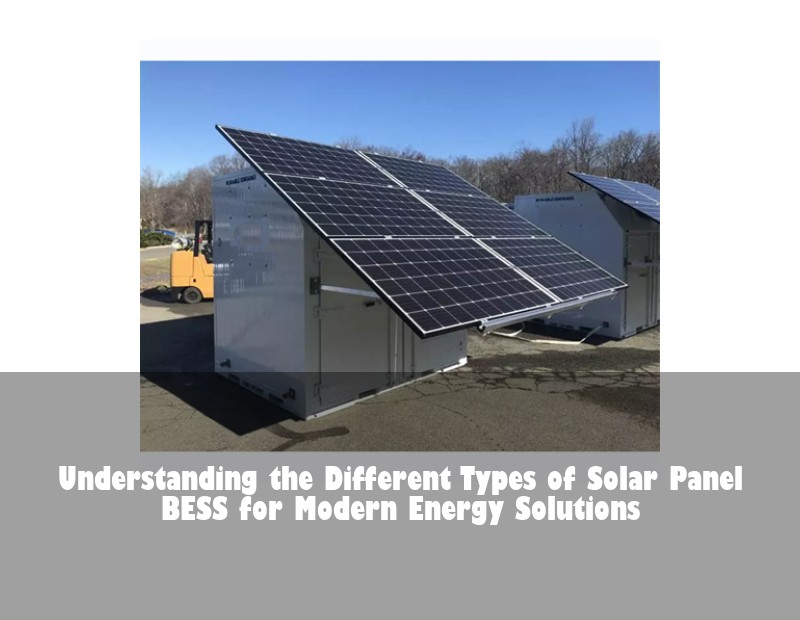
Imagine harnessing the sun's power during the day and using it seamlessly at night—this is the promise of solar panel Battery Energy Storage Systems (BESS). As Europe accelerates its renewable transition, understanding the types of solar panel BESS becomes critical for homeowners, businesses, and grid operators alike. Let's explore how these technologies transform sunlight into reliable, around-the-clock energy.
Table of Contents
- The Critical Role of BESS in Solar Energy Systems
- Lithium-ion Batteries: The Market Leader
- Lead-Acid Batteries: The Established Veteran
- Flow Batteries: For Long-Duration Storage
- Emerging Technologies: Solid-State & Sodium-Ion
- Case Study: Germany's BESS Diversity in Action
- Choosing Your Ideal Solar BESS
The Critical Role of BESS in Solar Energy Systems
Solar panels generate power intermittently—peak production occurs at midday, while energy demand often peaks in the evening. Without storage, excess energy goes to waste. Battery Energy Storage Systems solve this by storing surplus solar energy for later use, enhancing self-consumption and grid stability. In Europe, where countries like Spain and Germany see solar penetration rates exceeding 15%, BESS mitigates grid congestion and reduces reliance on fossil-fuel backups during cloudy periods.
Lithium-ion Batteries: The Market Leader
Dominating 90% of new installations, lithium-ion (Li-ion) batteries offer high energy density and efficiency. Their compact size makes them ideal for residential rooftops and commercial projects.
Advantages
- Efficiency: 95% round-trip efficiency (energy retained during charge/discharge)
- Lifespan: 10-15 years with 6,000+ charge cycles
- Space-saving: 3x denser than lead-acid alternatives
Limitations
- Higher upfront cost: €500-€700/kWh
- Thermal sensitivity: Requires temperature management
For example, Tesla's Powerwall uses Li-ion chemistry to provide seamless backup during outages—a key selling point in storm-prone regions like the UK.
Lead-Acid Batteries: The Established Veteran
Though declining in market share, lead-acid remains relevant for budget-conscious or off-grid applications. These flooded or AGM (Absorbent Glass Mat) batteries are robust but bulkier.
Advantages
- Cost: 50% cheaper than Li-ion (€200-€300/kWh)
- Recyclability: 99% of materials are recoverable
Limitations
- Shorter lifespan: 3-7 years with 1,500 cycles
- Lower efficiency: 70-80% round-trip efficiency
They're still favored in remote areas—like Scandinavian cabins—where extreme cold tolerances outweigh efficiency concerns.
Flow Batteries: For Long-Duration Storage
Flow batteries store energy in liquid electrolytes, exceling in grid-scale applications needing 4+ hours of storage. Vanadium redox flow (VRFB) is the most commercialized type.
Advantages
- Decades-long lifespan: 20-30 years with minimal degradation
- Scalability: Energy capacity easily increased via larger electrolyte tanks
Limitations
- Low energy density: Requires significant space
- High cost: €400-€800/kWh for large systems
Utilities deploy them for seasonal storage—critical in Nordic winters with limited sunlight.
Emerging Technologies: Solid-State & Sodium-Ion
Innovations aim to overcome current limitations. Solid-state batteries replace liquid electrolytes with solids, enhancing safety and energy density. Sodium-ion alternatives use abundant materials like salt, slashing costs and supply-chain risks.
Breakthrough Potential
- Solid-state: 2x energy density of Li-ion; prototypes by QuantumScape target 2025 commercialization
- Sodium-ion: Costs 30% less than Li-ion; Natron Energy already supplies data centers
These technologies could democratize storage—especially in Eastern Europe where lithium costs are prohibitive.
Case Study: Germany's BESS Diversity in Action
Germany's "Energiewende" (energy transition) relies on a BESS mosaic. In 2023, the Fraunhofer Institute reported:
- Residential: 78% Li-ion adoption (e.g., sonnen ecoLinx)
- Industrial: VRFB installations grew 200% year-over-year
- Project Highlight: The Schwerin Flow Battery (15 MWh) stores wind+solar energy, reducing grid strain during peak hours—saving €1.2M annually in congestion fees.
This hybrid approach ensures reliability as renewables cover 50% of Germany's electricity mix.
Choosing Your Ideal Solar BESS
Selecting a system hinges on three factors:
- Use Case: Short-duration backup (Li-ion) vs. long-duration grid support (flow)
- Budget: Lead-acid for CAPEX sensitivity; Li-ion for long-term savings
- Location: Temperature extremes favor robust chemistries like LiFePO4
Consult tools like the EU Energy Storage Explorer to model regional incentives.
What's Your Solar Storage Priority?
Is maximizing self-sufficiency your goal, or are you contributing to a greener grid? Share your energy vision—we'll help map it to the perfect BESS type.
 Inquiry
 Online Chat